
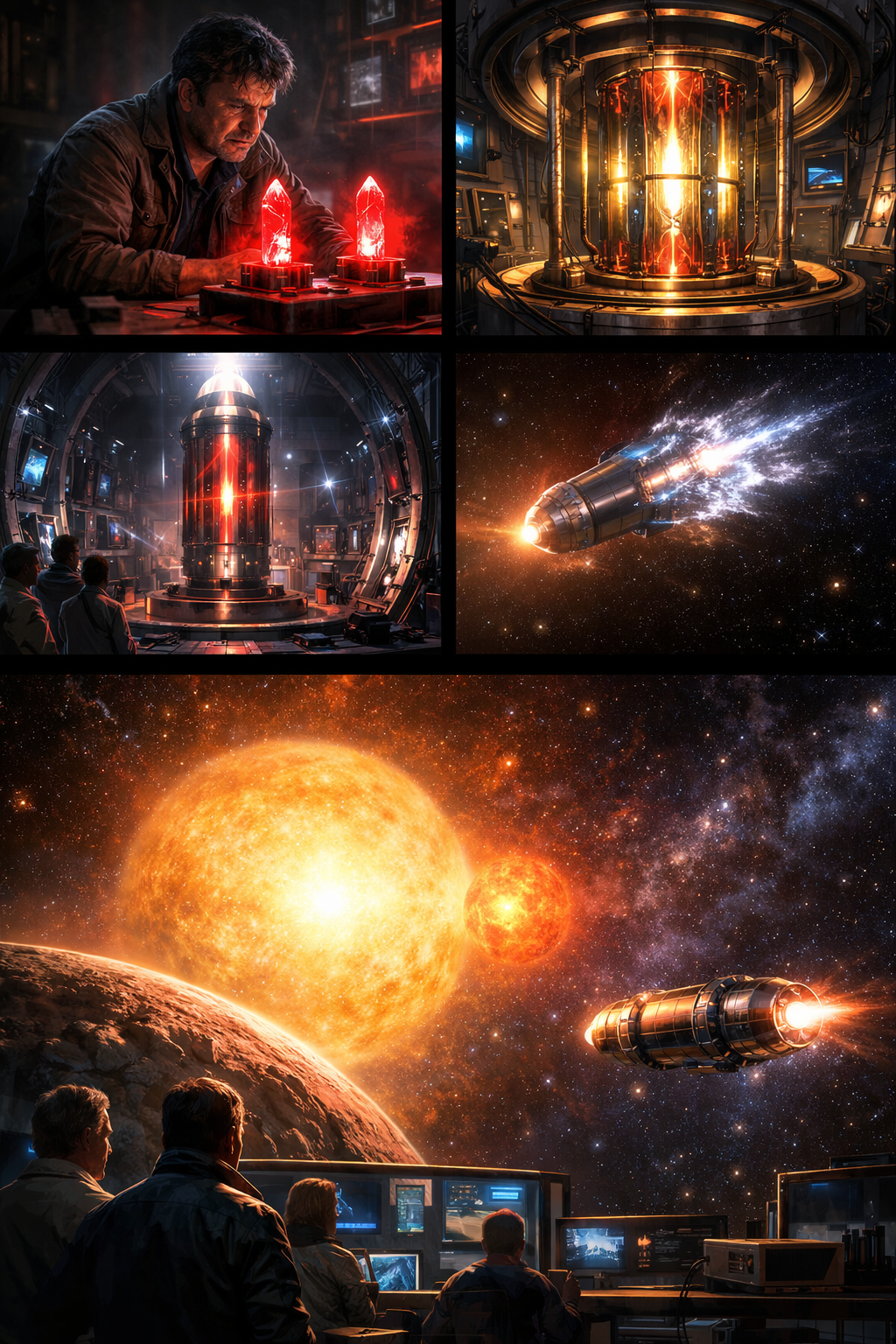
Light-Based Travel: A Conceptual Engineering Premise
This document explores a speculative concept for space travel based on the fundamental properties of light. By examining how electromagnetic radiation connects objects across vast distances in the universe, the document proposes a theoretical mechanism for propulsion that leverages synchronization with specific light frequencies. While the concept extends beyond currently validated physics and engineering capabilities, it aims to stimulate discussion and innovation in advanced propulsion systems and interstellar travel methodologies.
Modern space travel relies primarily on chemical propulsion and, more recently, experimental electric and ion-based systems. These methods, while effective for limited distances, are insufficient for efficient interstellar exploration due to constraints in speed, fuel, and time. Consequently, alternative paradigms must be considered. One such paradigm is based on the universal presence and behavior of light.
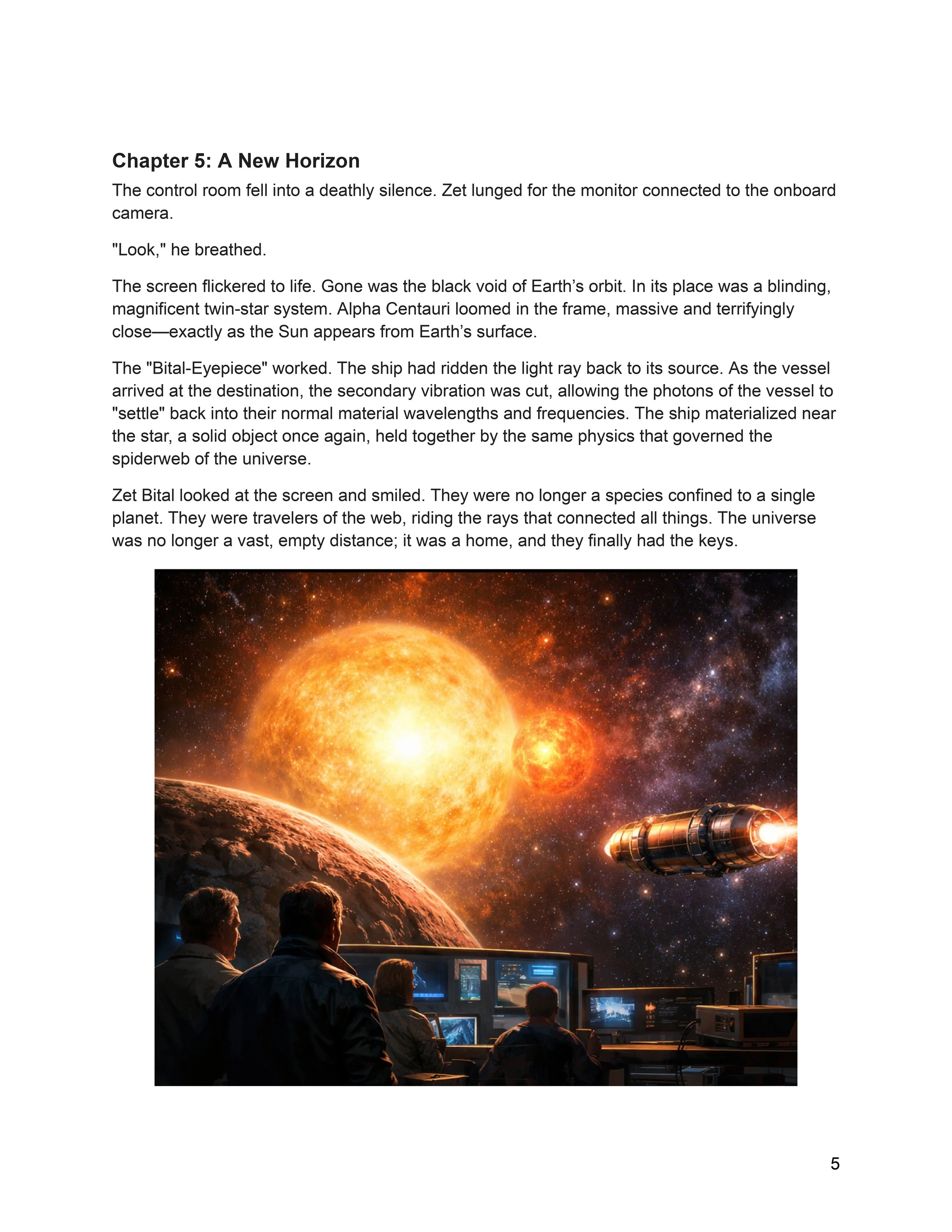
To begin, consider a localized region of our galaxy. Every star, planet, comet, and particle within this region emits, reflects, or interacts with light. These interactions allow objects to be observed and, in a sense, “connected” through electromagnetic radiation. Expanding this perspective to include multiple galaxies reveals a broader network: nearly all visible matter in the universe participates in this exchange of light. From this standpoint, light can be interpreted as a universal connector—a medium through which information and energy propagate.
This document proposes that if light connects all observable points in space, it may also serve as a pathway for travel. The premise is not merely to observe light but to interact with it in a way that enables motion along its trajectory.
Light, or electromagnetic radiation, travels at approximately 3 × 10⁸ meters per second in a vacuum. It exhibits both wave-like and particle-like properties, described by quantum electrodynamics. Photons, the fundamental particles of light, are massless and always travel at the speed of light. One intriguing aspect of photons is that, from their own frame of reference (as interpreted through relativity), they do not experience time. While this interpretation is nuanced and often debated, it highlights the unique nature of light compared to matter.
The electromagnetic spectrum encompasses a wide range of frequencies and wavelengths. Within the visible spectrum, cyan light occupies a range between green and blue, with a frequency of approximately 6 × 10¹⁴ Hz and a wavelength near 500 nanometers. This document selects cyan light as a reference point due to its position near the center of the visible spectrum, making it a convenient candidate for theoretical manipulation.
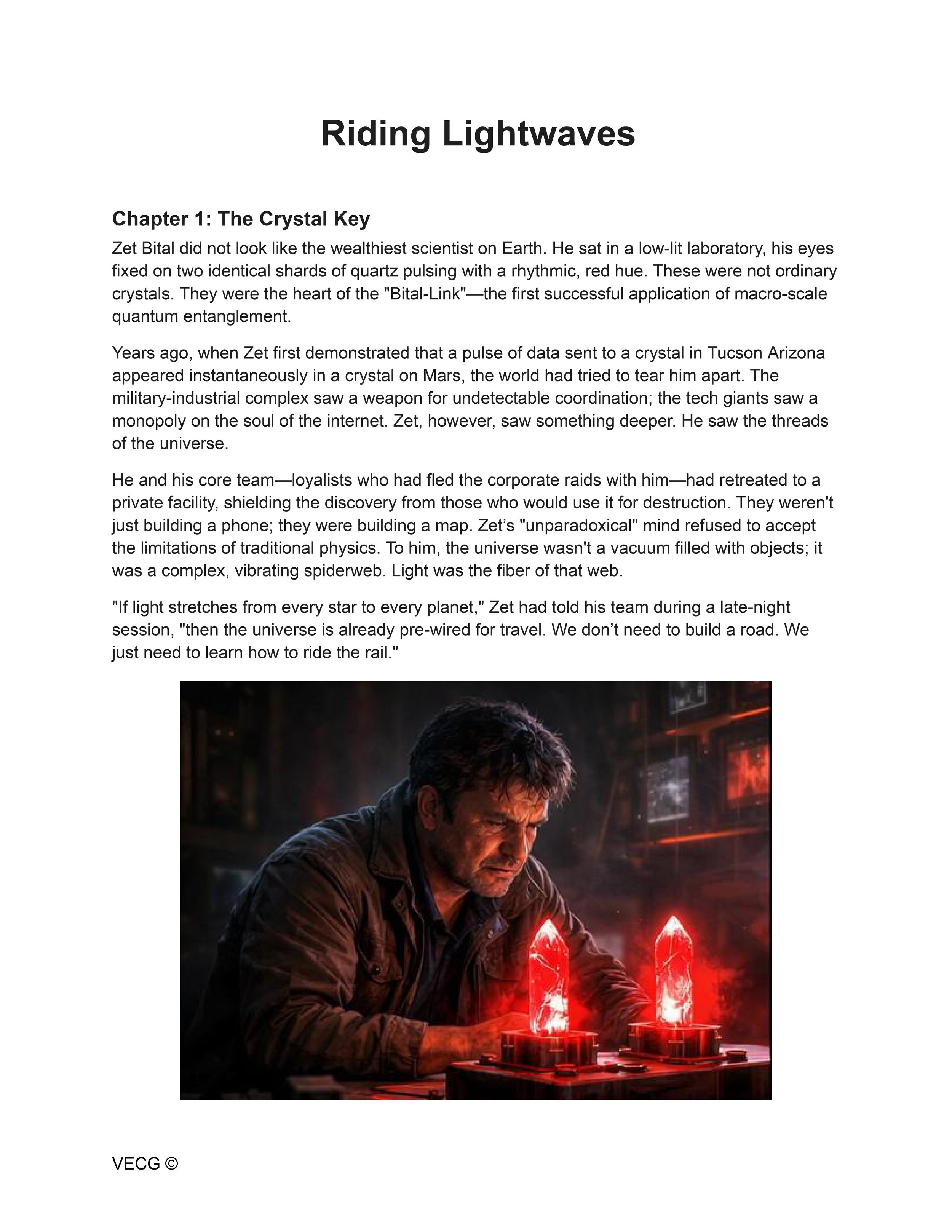
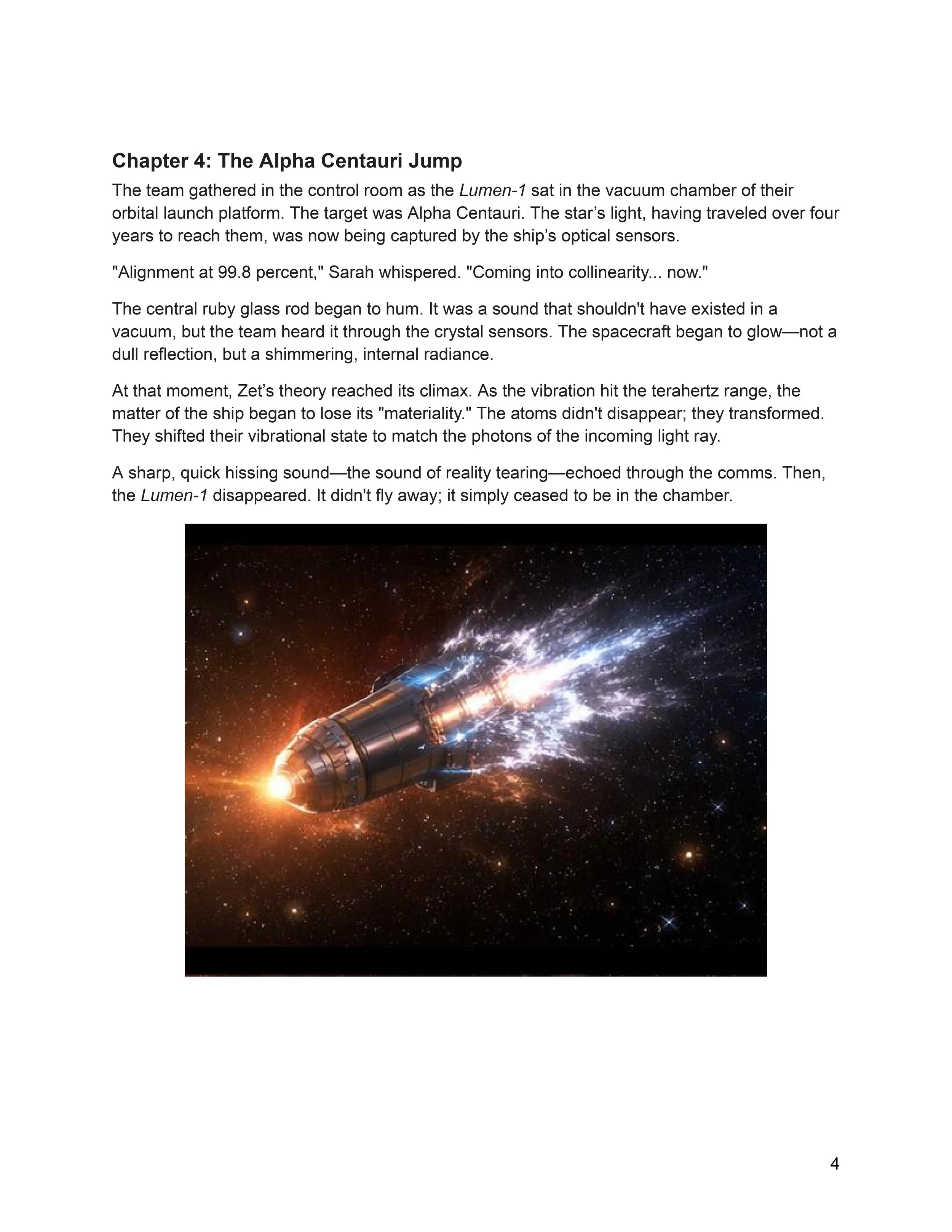
The proposed mechanism for light-based travel involves the use of a specialized optical system designed to align a vehicle with a measured light trajectory. The core component of this system is a thin optical tube, engineered with high precision. This tube would be oriented toward a specific light source or a reflection (referred to as the “last bounce point”).
As light enters the tube, it would propagate along its length, displaying its spectrum characteristics. The system would include an interface capable of “grounding” or synchronizing the vehicle with the incoming light frequency and wavelength. This synchronization process is hypothesized to align the vehicle with the wave itself.
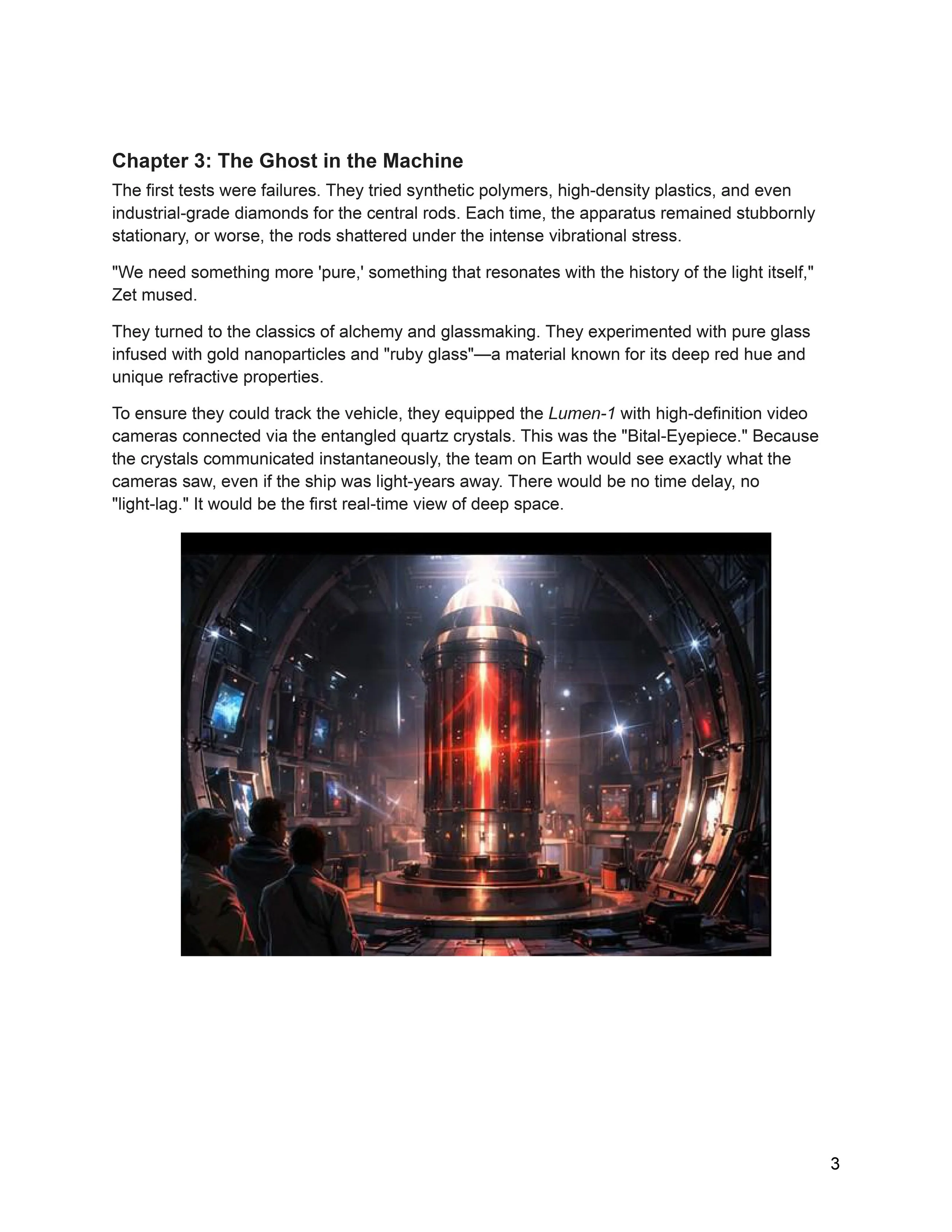
Once synchronization is achieved, the vehicle would theoretically undergo instantaneous translation along the light’s effectively “riding” the whole “vehicle ” toward its origin or last reflection or interaction. This concept suggests motion not through propulsion, but through alignment with an existing light inducing a synchronization phenomenon to move along the ray direction.