



Crystal entanglement for communication
The Paradoxical Clinical Constraint
All the books discussing entanglement describe it clinically: particles linked across space, inseparably bound, their states mirroring each other. In the standard model of physics, this "spooky action at a distance" is a delicate dance performed by photons or electrons. It is framed as fragile, confined to the subatomic, and perceptible only under the most rigorous laboratory conditions—near absolute zero, shielded from the "noise" of the macroscopic world. The consensus has long been that once matter scales up to the level of the visible and the tangible, the quantum connection collapses into the mundane.
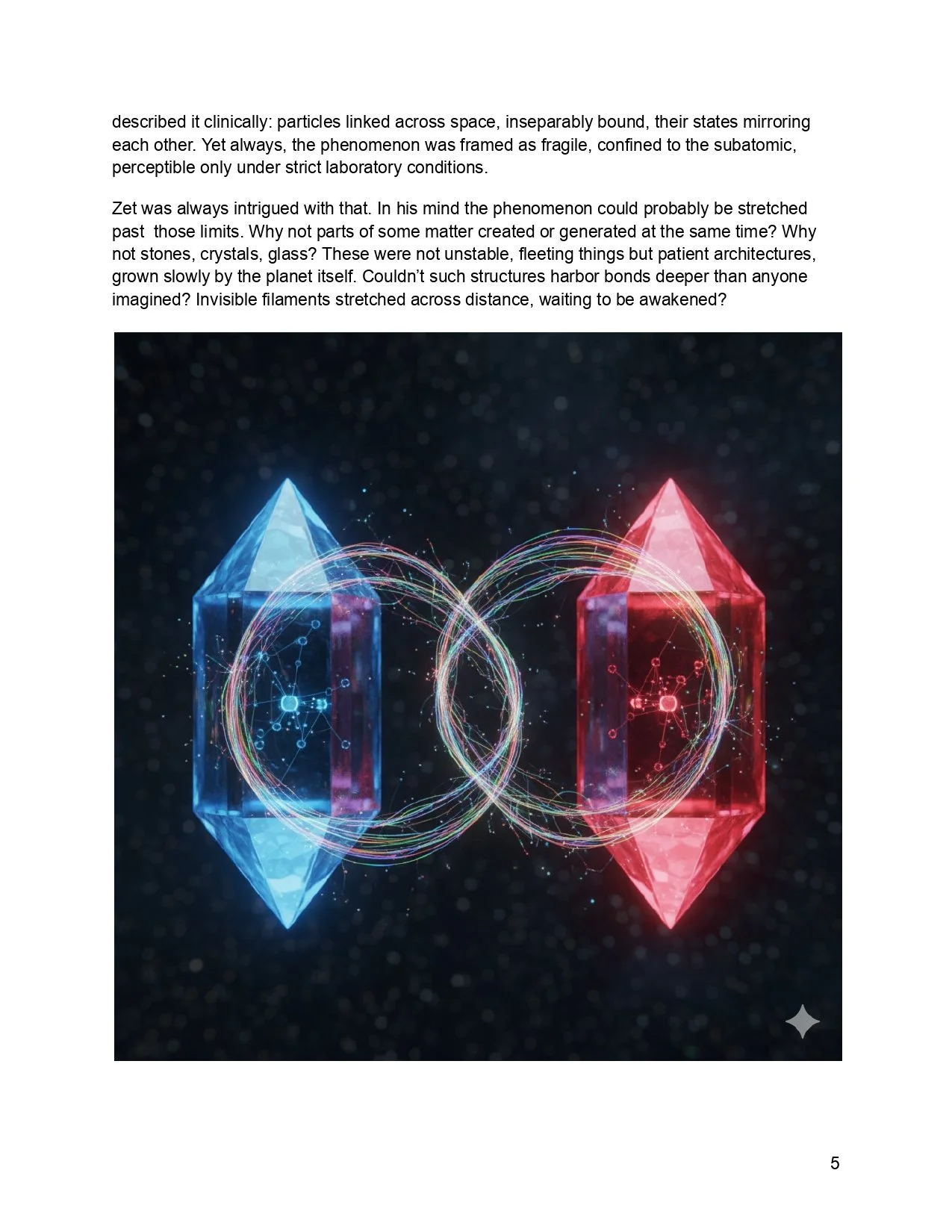
Yet, this consensus may be a limitation of our current observation, not a law of the universe. If entanglement is a fundamental property of the building blocks of reality, the phenomenon could probably be stretched past those clinical limits. Why should the bond vanish simply because the particles have joined to form something larger? If two atoms can be linked, why not parts of some matter created or generated at the same time?
Patient Architectures
Why not stones, crystals, glass? These are not the unstable, fleeting things of the particle accelerator; they are patient architectures, grown slowly by the planet itself over eons. Unlike organic matter, which is a chaotic flurry of chemical reactions and decay, a crystal is a monument to order.
Crystals are born from a state of flux—magma cooling or mineral-rich waters evaporating—where individual atoms find their precise place in a repeating lattice. In this slow, geothermal birth, every atom is positioned in relation to its neighbor with mathematical exactitude. It is postulated here that all these structures harbor bonds deeper than anyone imagined. For crystallization minerals, with their own specific internal structures, slowly form a superstructure of established geometry. This process creates a profound, intrinsic relationship within all the mineral contents. Because they are forged in the same moment of phase transition, the entire body of the crystal may exist in a state of collective entanglement.
The Splintered Whole: Spooky Connections
If a crystal is split, the physical separation does not necessarily mean a metaphysical or quantum severance. According to this theory, each piece remains “spooky” connected. When one half is held in a laboratory in one hemisphere and the other is buried deep in the crust of another, they remain a singular entity in the underlying fabric of spacetime.
The piece in your hand will “feel” what is happening to the other one. If one half is subjected to extreme pressure, the other may exhibit a subtle shift in its lattice vibration. If one is heated, the other’s internal energy may spike without an external source. This is not mere coincidence but the manifestation of a shared identity that transcends physical distance. This connection could be mediated through resonation or vibrations—what we might call "lithic harmonics"—or other physical factors currently ignored by mainstream geophysics.
Light as the Bridge
The most compelling medium for this interaction is light. Crystals are, by their nature, masters of light; they refract, reflect, and polarize the electromagnetic spectrum. It is postulated here that the use of light is the key to activating and observing macroscopic entanglement.
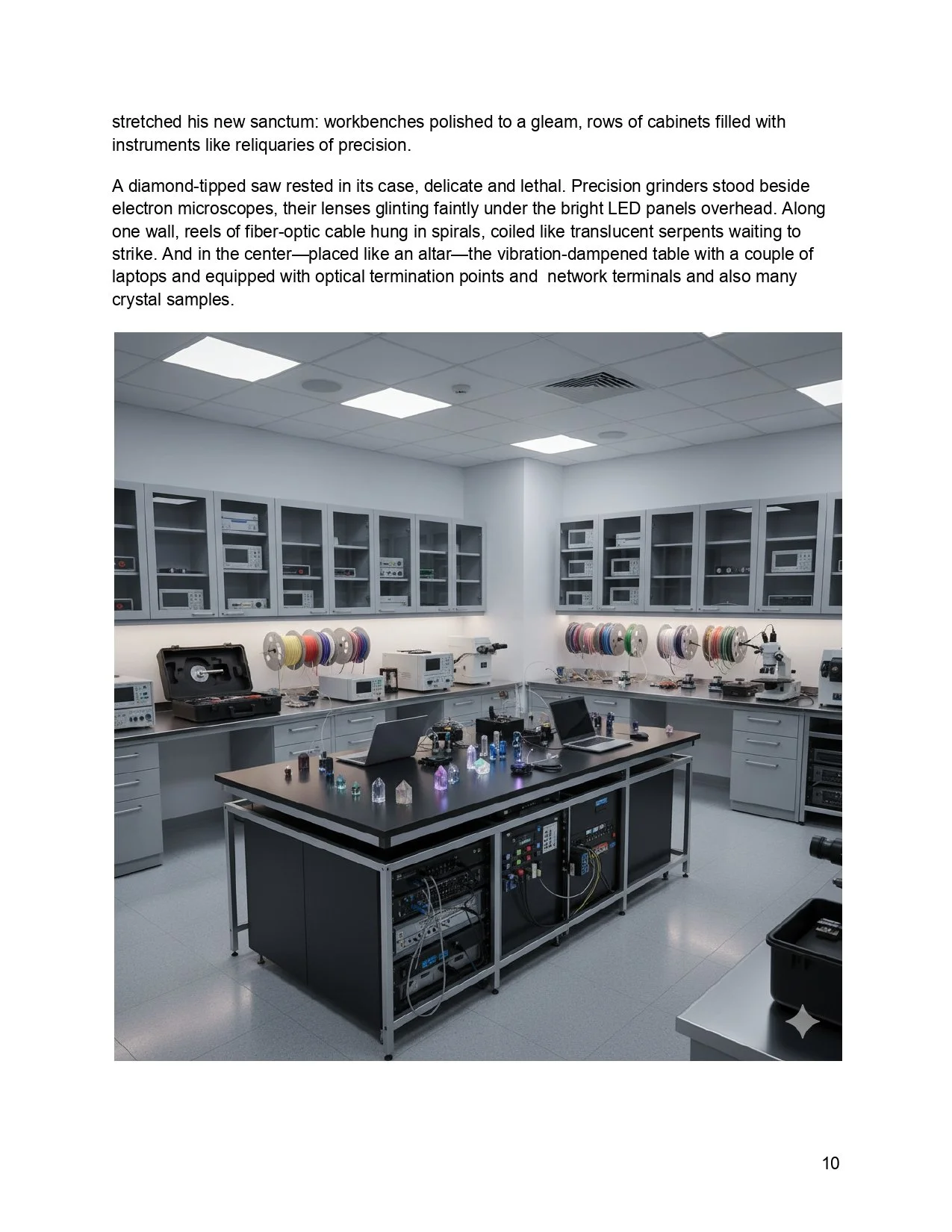
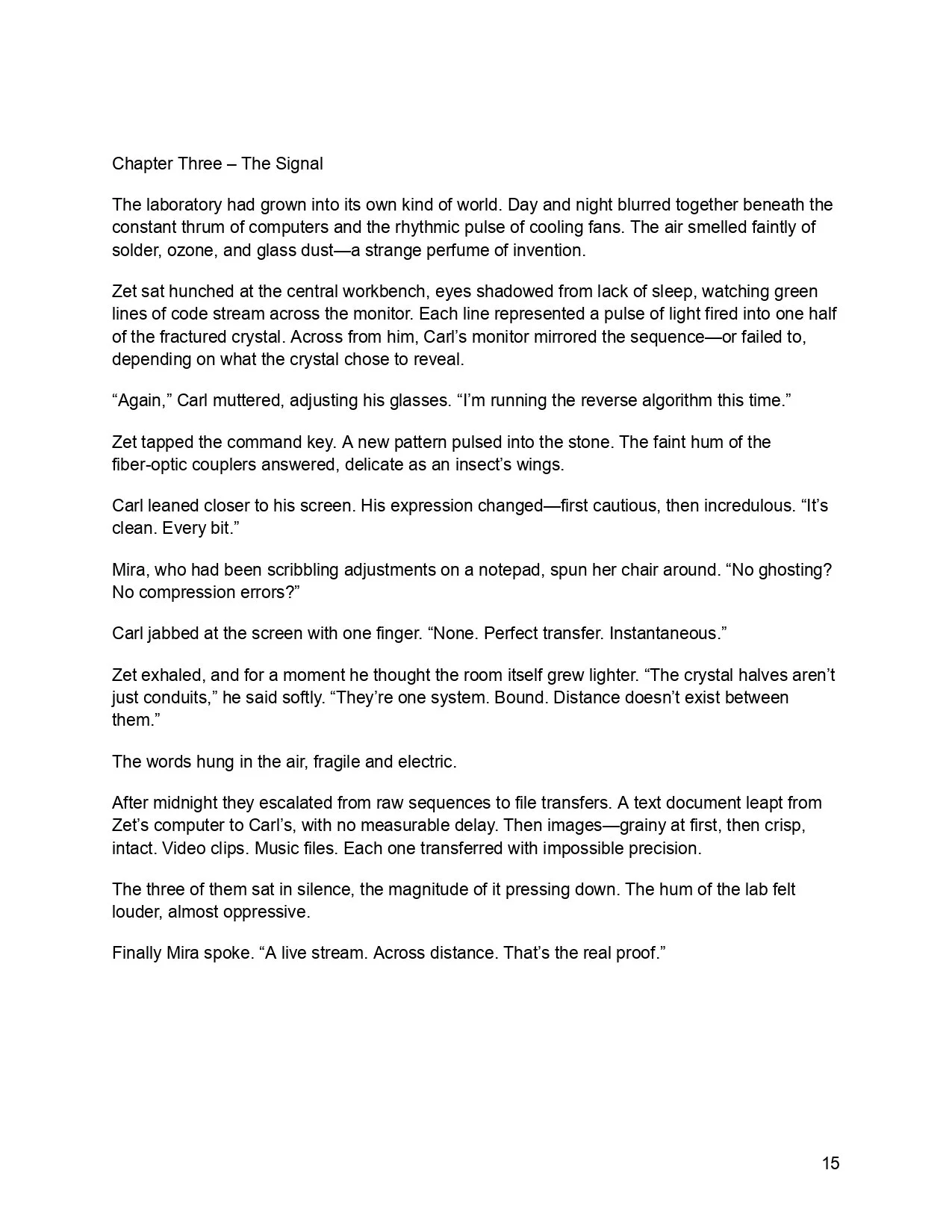
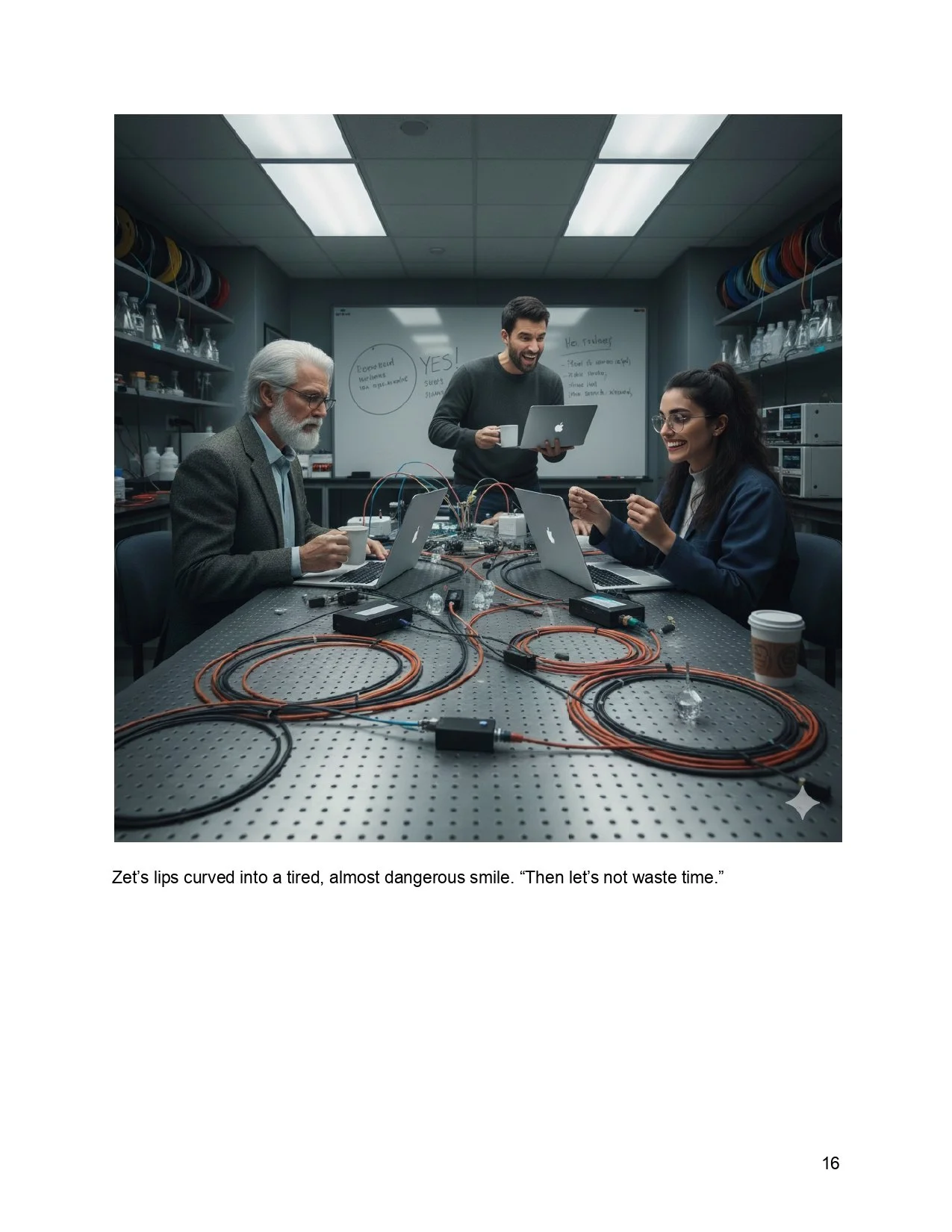
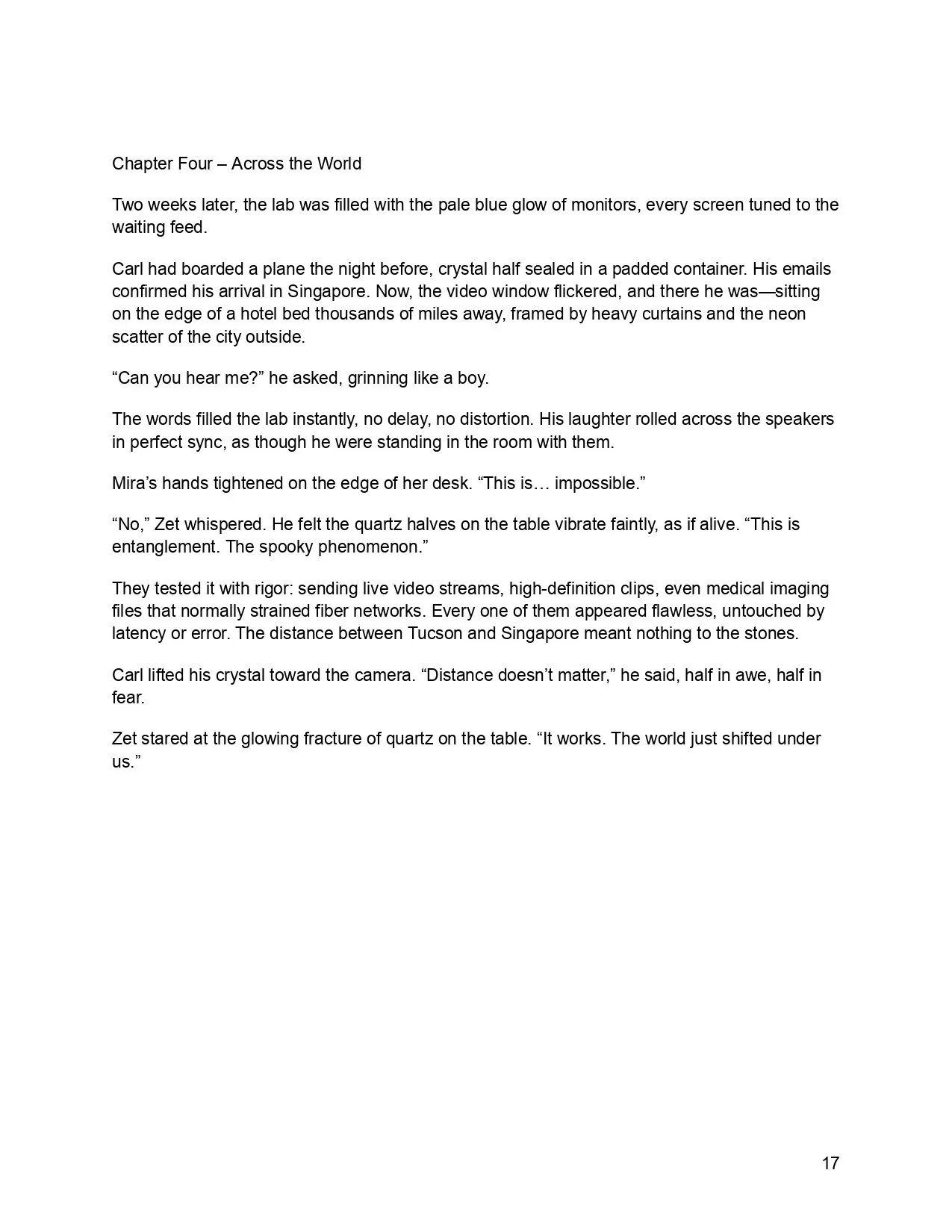
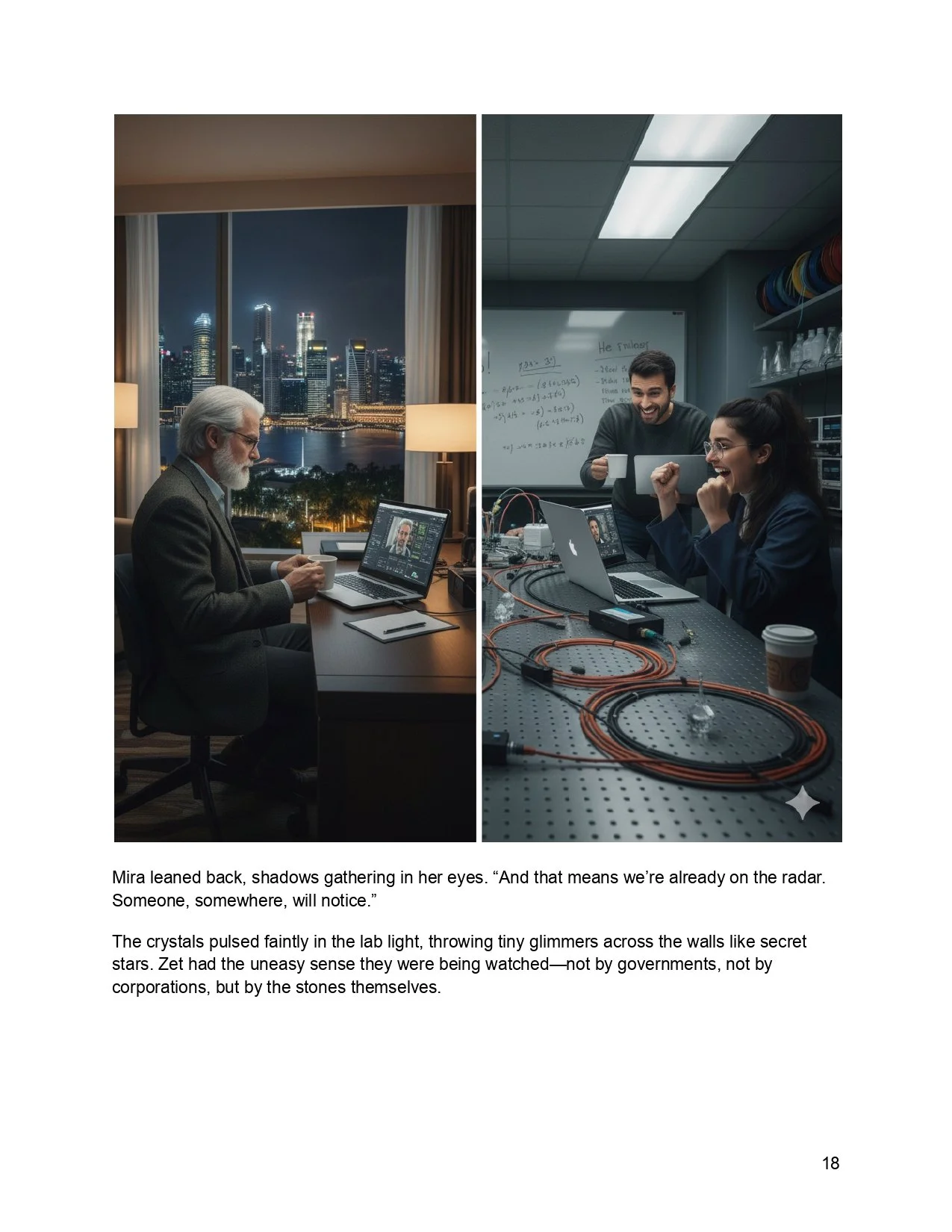
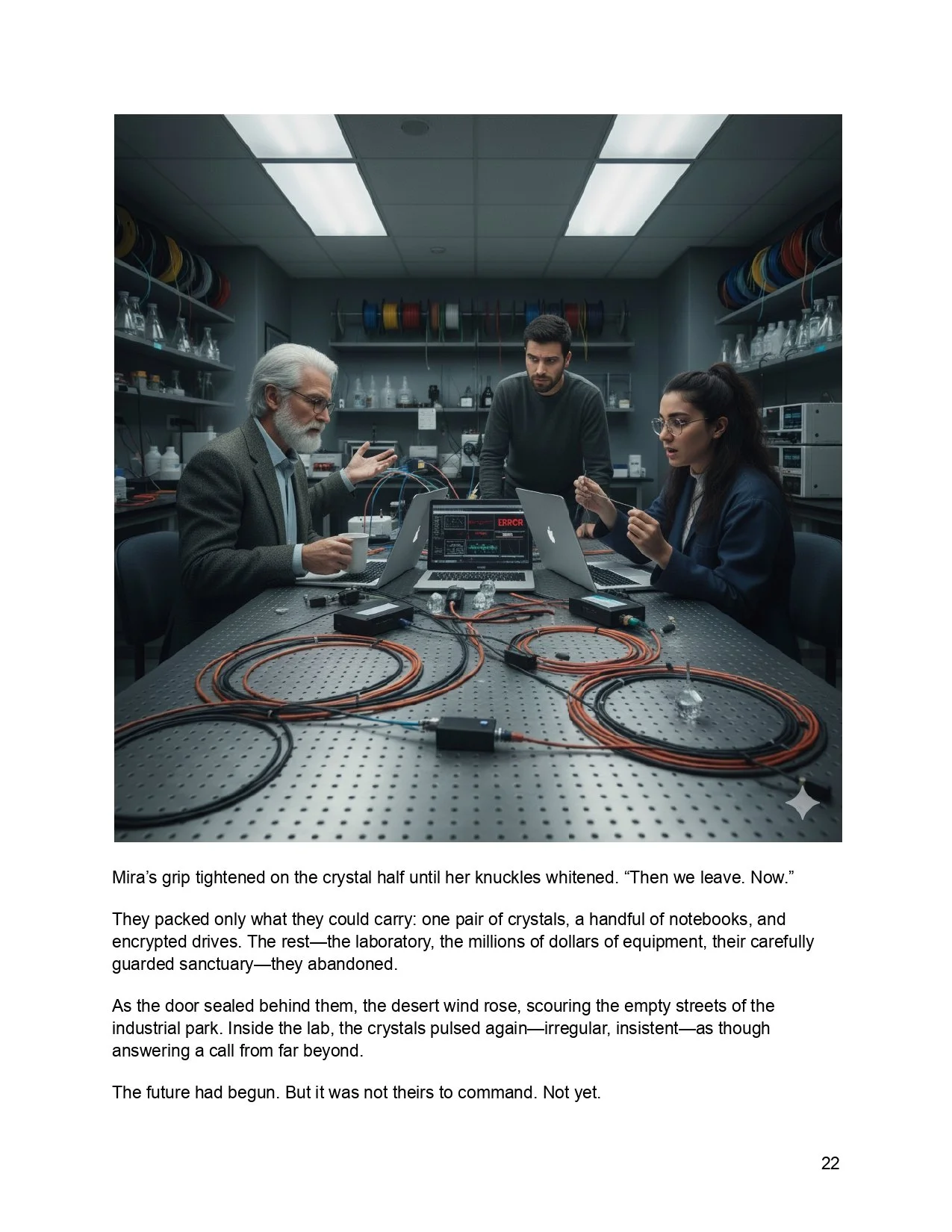
When a photon enters an entangled crystal lattice, it does not simply pass through. It interacts with the collective quantum state of the mineral. By using laser-induced resonance, we might send information through one crystal fragment and have it emerge, instantaneously, from its twin. The crystal acts as a biological-mechanical "transceiver," where the geometric superstructure provides the stability that subatomic particles lack.
The Superstructure and the Future
The implications of "Lithic Entanglement" are vast. If stones and crystals can maintain resonance, we are looking at a planetary network of communication that has existed since the earth first cooled. We are moving toward a science where the "clinical" and the "mystical" converge—where the rigid geometry of a quartz point is recognized not just as a decoration, but as a stable, entangled node in a cosmic web.
Crystallization is not just a geological process; it is a manifestation of universal order. By understanding how minerals form their established geometry, we unlock a strong relationship that suggests the universe is not made of separate objects, but of deeply connected architectures that "feel" and respond across the universe.